

David Cotriscau, a SoCoBio DTP student, is thrilled to share a review article that he has written as background literature to his project.
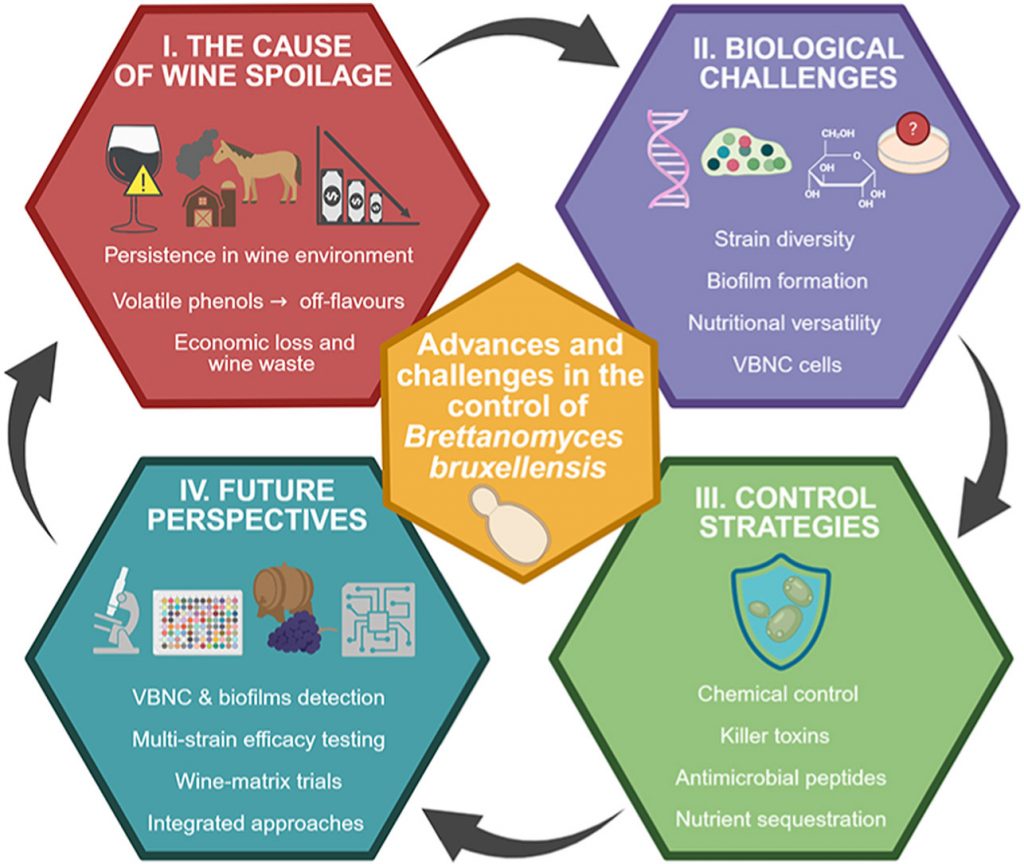
Brettanomyces bruxellensis is one of the main spoilage yeasts in wine, producing volatile phenols that can create unwanted aromas and reduce quality. It is difficult to control because it tolerates harsh winery conditions, forms biofilms and can enter a viable but non-culturable state that makes detection harder.
This review explores the traits that help B. bruxellensis survive and compares current control methods, including sulfur dioxide, chitosan, dimethyl dicarbonate and biological alternatives such as killer toxins and antimicrobial compounds. It also critiques the limitations of existing approaches and discusses how more targeted, combined and biologically based strategies could improve Brett control in winemaking.
Read the full publication in Science Direct: